
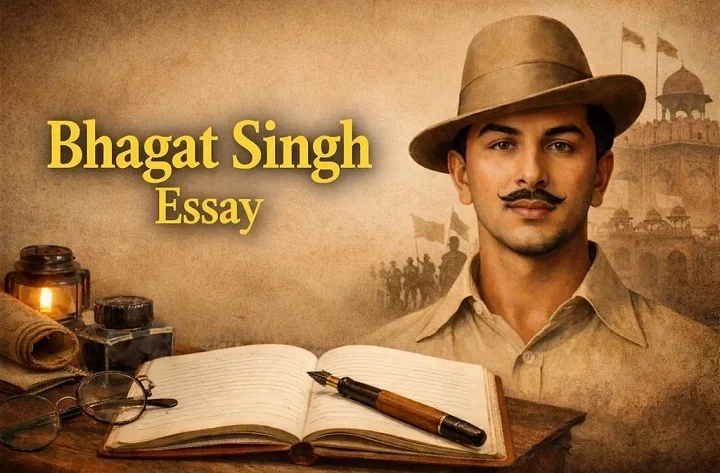
Bhagat Singh was one of the most influential revolutionaries of the Indian freedom struggle. He became a symbol of courage, sacrifice and resistance against British rule at a very young age. His life was short, but his ideas, actions and fearlessness left a lasting impact on generations of Indians.
Bhagat Singh was not only a revolutionary who took part in armed resistance. He was also a serious reader, writer and political thinker who believed that true freedom should include justice, equality and dignity for ordinary people. This combination of action and thought is one of the main reasons his story remains so powerful.
Early Life of Bhagat Singh
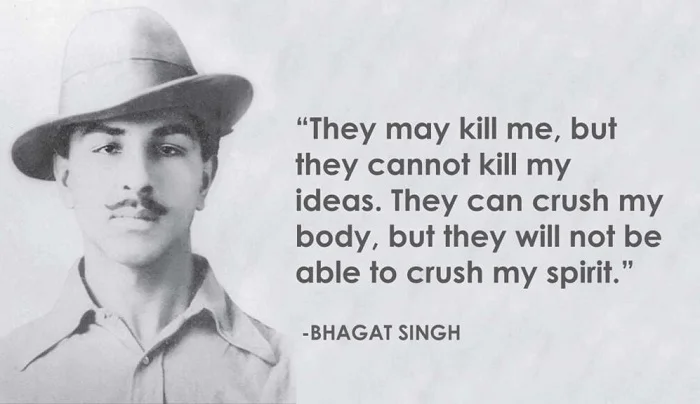
Bhagat Singh was born on 28 September 1907 in Banga, Punjab, which is now in Pakistan. He was born into a family that was already involved in the struggle against British rule, so discussions about freedom and resistance were part of his environment from childhood.
His father Kishan Singh and his uncle Ajit Singh were connected with nationalist activities. Growing up in such a family influenced Bhagat Singh deeply and helped shape his political thinking from a young age.
Impact of the Jallianwala Bagh Massacre
The Jallianwala Bagh massacre of 1919 had a deep impact on Bhagat Singh. British troops fired on a large gathering in Amritsar, killing and injuring many people.
The incident shocked the country and strongly influenced young Bhagat Singh. Popular accounts say that he visited the site and carried back soil from Jallianwala Bagh as a memory of those who had died.
For him, the massacre became a symbol of the brutality of colonial rule.
Education and Political Thinking
Bhagat Singh studied at the National College in Lahore, where he was exposed to nationalist ideas, political debates and revolutionary literature. He read widely about history, socialism, revolution and political movements in different parts of the world.
He was interested not only in ending British rule but also in creating a more equal and just society. Over time, his ideas became broader and more ideological.
This is why Bhagat Singh is remembered not only for his actions but also for his political writings.
Joining Revolutionary Groups
Bhagat Singh became associated with revolutionary organizations that opposed British rule through direct action. He later became an important member of the Hindustan Socialist Republican Association, commonly known as the HSRA.
Other major revolutionaries connected with the movement included Chandrashekhar Azad, Sukhdev and Rajguru.
The group believed that political freedom should be connected with social and economic justice.
Also Read: Story of Moses in the Bible Summary
Death of Lala Lajpat Rai
In 1928, the Simon Commission arrived in India and faced strong protests because it did not include Indian representation. In Lahore, a protest led by Lala Lajpat Rai was met with a police lathi charge.
Lala Lajpat Rai was badly injured and later died.
Bhagat Singh and his companions believed that the British authorities were responsible for his death and decided to take revenge.
The Saunders Killing
Bhagat Singh, Rajguru and others planned to target police officer James Scott, who was believed to have ordered the lathi charge. However, Assistant Superintendent of Police John Saunders was killed instead.
After the incident, Bhagat Singh had to avoid arrest and change his appearance.
This event made him one of the most wanted revolutionaries in British India.
Central Legislative Assembly Bombing
In 1929, Bhagat Singh and Batukeshwar Dutt carried out a bombing inside the Central Legislative Assembly in Delhi. Their aim was not mass killing but political protest.
They used low intensity bombs and threw leaflets to explain their message. Instead of escaping, they stayed there and allowed themselves to be arrested.
They wanted to use the trial and public attention to spread their political ideas.
“Inquilab Zindabad”
The slogan “Inquilab Zindabad,” meaning “Long Live the Revolution,” became strongly associated with Bhagat Singh and his comrades.
For Bhagat Singh, revolution did not simply mean violence. It meant deep political and social change.
Through speeches, statements and court appearances, he tried to explain that freedom should create a better society, not simply replace one ruling group with another.
Hunger Strike in Jail
While in jail, Bhagat Singh and other prisoners protested against the unequal treatment of Indian political prisoners. They demanded better food, reading material and treatment equal to that given to European prisoners.
They began a hunger strike that attracted national attention.
The hunger strike showed another side of Bhagat Singh’s resistance. He was ready to use his own suffering as a political weapon to expose injustice.
Bhagat Singh as a Writer and Thinker
Bhagat Singh wrote about politics, religion, freedom and revolution. One of his most famous essays is “Why I Am an Atheist,” in which he explained his personal beliefs and rational approach to life.
His writings show that he was deeply interested in ideas and was not simply driven by anger.
Even during imprisonment, he continued reading and writing as much as possible.
Death Sentence
Bhagat Singh, Sukhdev and Rajguru were tried in the Lahore Conspiracy Case and sentenced to death.
There were large protests and demands across India for their sentences to be reduced, but the British government did not change its decision.
On 23 March 1931, Bhagat Singh, Rajguru and Sukhdev were executed in Lahore Central Jail.
Bhagat Singh’s Age at the Time of Death
Bhagat Singh was only 23 years old when he was executed.
His young age made his sacrifice even more powerful in the public imagination. People across India began to see him as a symbol of fearless youth and resistance.
The date 23 March is remembered as Martyrs’ Day in honor of Bhagat Singh, Rajguru and Sukhdev.
Why Is Bhagat Singh Called Shaheed-e-Azam?
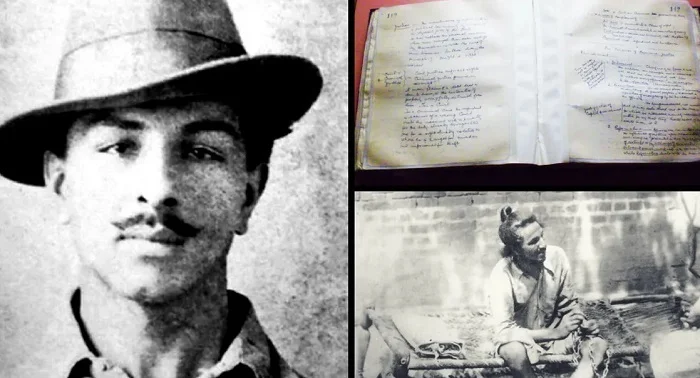
Bhagat Singh is often called Shaheed-e-Azam, meaning “Great Martyr,” because of his sacrifice for the freedom struggle.
He gave up the possibility of a normal personal life and accepted the risks of revolutionary politics at a very young age.
His execution turned him into one of the most powerful symbols of the Indian independence movement.
Bhagat Singh and Non-Violence
Bhagat Singh’s methods were different from Mahatma Gandhi’s philosophy of non-violence. He believed that revolutionary action could sometimes be necessary in the struggle against oppression.
However, his political ideas went far beyond armed action. He was deeply concerned with social equality, exploitation and political awareness.
The Indian freedom movement included many different approaches, and Bhagat Singh became one of the most important figures of the revolutionary tradition.
What Can We Learn from Bhagat Singh’s Story?
Bhagat Singh’s story teaches courage, commitment and the importance of ideas. He showed that young people can play a major role in shaping history when they are informed, disciplined and willing to stand for what they believe is right.
His life also shows that patriotism is not only about emotion. Bhagat Singh believed in reading, questioning and understanding society.
His example continues to inspire people to think seriously about freedom, justice and responsibility.
Important Facts About Bhagat Singh
- Bhagat Singh was born on 28 September 1907.
- He was born in Banga, Punjab.
- His family was involved in nationalist activities.
- The Jallianwala Bagh massacre deeply influenced him.
- He became a member of the HSRA.
- He was involved in the Saunders killing in 1928.
- He and Batukeshwar Dutt bombed the Central Legislative Assembly in 1929.
- He took part in a major hunger strike in jail.
- He was a political writer and thinker.
- He was executed with Rajguru and Sukhdev on 23 March 1931.
Questions People Ask
Who was Bhagat Singh?
Bhagat Singh was an Indian revolutionary who fought against British rule and became one of the most famous symbols of the freedom struggle.
When was Bhagat Singh born?
He was born on 28 September 1907.
Why was Bhagat Singh executed?
He was sentenced to death in connection with the Lahore Conspiracy Case and the killing of John Saunders.
How old was Bhagat Singh when he died?
Bhagat Singh was only 23 years old when he was executed.
What is the main lesson from Bhagat Singh’s life?
His life teaches courage, sacrifice, political awareness and the importance of standing against injustice.
Bhagat Singh’s story is one of the most powerful stories of courage and sacrifice in the Indian freedom struggle. He became a revolutionary at a young age, challenged British rule and used both action and ideas to spread his message.
His execution at the age of 23 made him a martyr, but his legacy goes far beyond his death. Bhagat Singh remains a symbol of fearless youth, independent thinking and the belief that freedom should come with justice and equality.